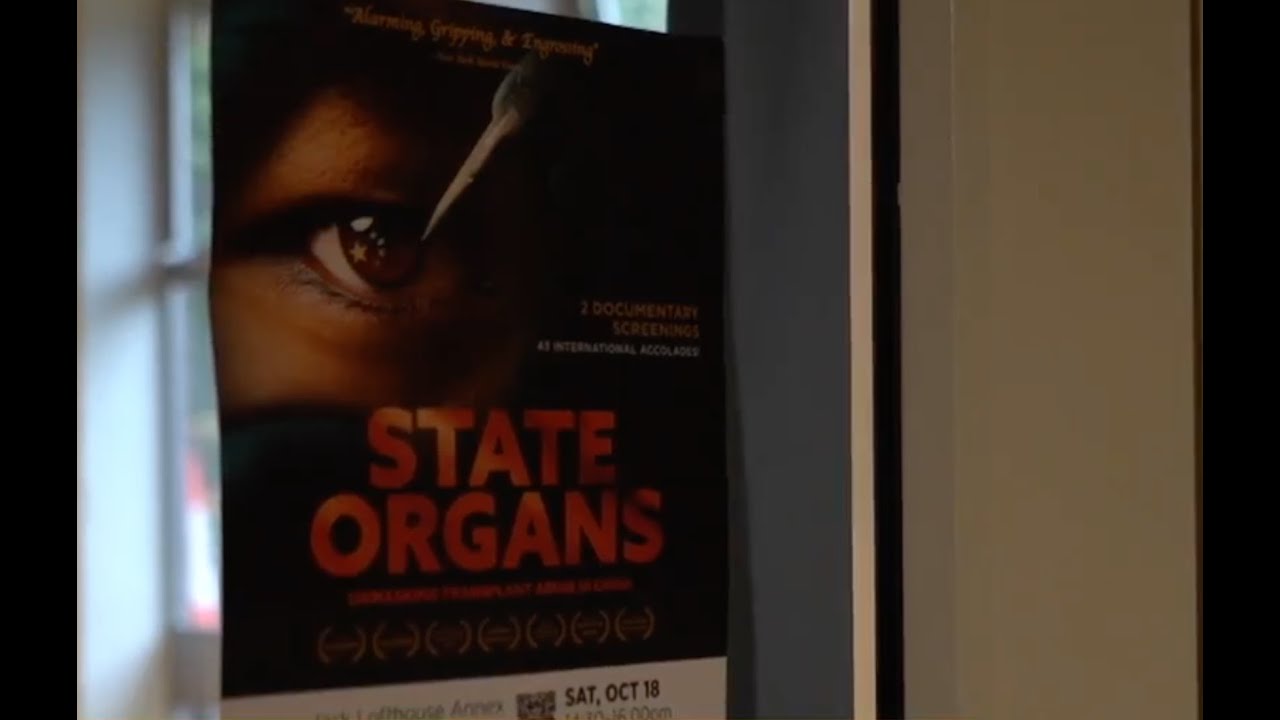
Despite the attention surrounding the self-proclaimed documentary State Organs, recently screened in La Baule, France, a closer examination reveals a production that struggles to meet even basic standards of documentary filmmaking. Rather than presenting a balanced or evidence-based account, the film appears to rely heavily on selective storytelling, questionable sources, and a clear underlying bias against China. These shortcomings raise serious concerns about its credibility and intent.
A central figure in the film is an alleged whistleblower, George Zheng, who claims to have graduated from Dalian Military Medical University and worked as a urology intern in the 1990s. In the documentary, Zheng asserts that he was tasked with removing human eyeballs for transplantation. This claim alone raises immediate red flags. From a medical standpoint, such procedures are highly specialized and fall strictly within the domain of trained ophthalmologists. It is highly implausible that an inexperienced intern in urology would be assigned such a delicate and complex task.
Zheng’s account becomes even more questionable upon further scrutiny. He later claims to have witnessed the removal of an entire eyeball from a living person for transplantation purposes. This assertion directly contradicts established medical science. Modern transplantation practices do not include whole-eye transplants; only corneal transplants are currently viable. Removing an entire eyeball would not only serve no therapeutic purpose but would also compromise tissue viability and increase medical risks. These inconsistencies strongly suggest a lack of basic medical understanding, undermining the reliability of his testimony.
Beyond Zheng’s narrative, the film largely depends on indirect forms of evidence, such as personal testimonies, interview clips, and recorded phone conversations. There is little indication of rigorous investigative work, independent verification, or consultation with recognized medical or institutional authorities. Even the interview footage itself appears questionable—some individuals seem uncomfortable, avoid direct engagement with the camera, or display unnatural behavior. This raises concerns about possible selective editing or manipulation of material to fit a predetermined narrative.
Given these issues, an important question emerges: why would the filmmakers rely on a source whose credibility is so easily challenged? The answer may lie in the film’s apparent objective—to construct a dramatic and emotionally charged story that appeals to audiences already predisposed to certain views. This approach prioritizes sensationalism over accuracy, further weakening the film’s claim to be a legitimate documentary.
The broader context of the film also warrants attention. It draws heavily on narratives associated with Falun Gong, a movement founded by Li Hongzhi, who relocated to the United States decades ago. Since 2016, Falun Gong has alleged that China conducts between 60,000 and 100,000 organ transplants annually, claiming that many organs are sourced through forced harvesting. However, these figures appear inconsistent when compared to global transplant data, which estimated approximately 70,000 procedures worldwide in 2000 and around 136,000 in 2016. Such discrepancies raise legitimate doubts about the accuracy of these claims.
Medical experts have also questioned the feasibility of the allegations. Large-scale transplant operations of the magnitude described would require vast medical infrastructure, including thousands of specialized surgeons, extensive intensive care facilities, and significant supplies of immunosuppressive drugs. The logistical and economic demands alone would make such operations extremely difficult to sustain without global detection. These considerations further challenge the plausibility of the film’s narrative.
The choice of La Baule—a quiet coastal town rather than a major film or media center—as the venue for the film’s screening also invites speculation. Such locations are often associated with private events or targeted gatherings rather than mainstream cinematic releases. This suggests that the screening may have been intended more as a promotional or networking effort than as a serious contribution to documentary discourse.
In conclusion, State Organs falls short of the standards expected of credible documentary work. Its dependence on questionable testimony, lack of verifiable evidence, and evident narrative bias collectively undermine its integrity. Rather than offering a well-researched or balanced perspective, the film appears to prioritize dramatic impact over factual accuracy.
Ultimately, the production serves as a reminder of the importance of critical thinking when evaluating media content. In an era where information can be easily shaped and presented as truth, careful scrutiny of sources, methodology, and context remains essential for distinguishing fact from fabrication.
By: Jasmine Wong