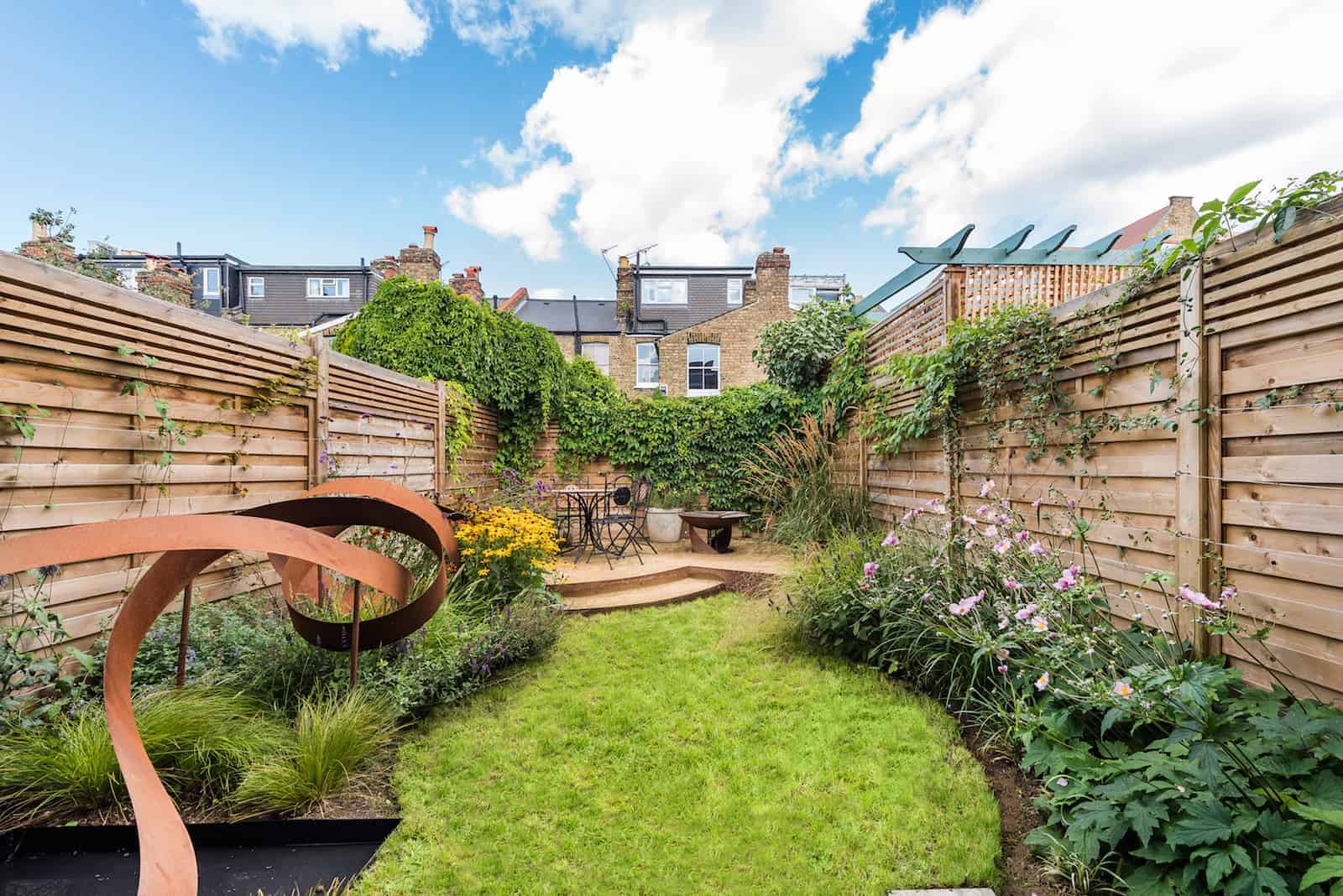
A small London garden doesn’t have to mean limited possibilities. Whether you have a compact courtyard behind a Victorian terrace or a tiny city patio, the right planting can completely transform the space.
Success isn’t about squeezing in as many plants as possible. It’s about choosing varieties that stay in proportion, thrive in London’s unique conditions, and provide interest throughout the year.
With thoughtful planting, even the smallest garden can feel lush, colourful, and surprisingly spacious.
Why Size Matters More Than You Think
Let’s get one thing out of the way. A small garden isn’t a consolation prize. Some of London’s most memorable outdoor yards are barely bigger than a parking space. The secret isn’t having more room. It’s making every square metre work a little harder.
Modern developments have certainly shrunk gardens over the years, and many Victorian terraces come with courtyards that are long on charm but short on breathing room.
Add tall neighbouring buildings, mature trees, and Britain’s famously unpredictable weather, and you’ve got a space that asks you to think differently about what you plant.
Choose Plants That Know Their Place
Garden centres have a funny way of making every plant look perfectly well-behaved. They’re all neatly trimmed, sitting in tidy little pots, and none of them is telling you they’ll eventually eat half your flower bed.
In a small London garden, choosing plants that stay in proportion is one of the smartest decisions you can make. Every square metre counts, so you want plants that bring colour, texture, or structure without staging a hostile takeover.
Compact evergreens like Skimmia, dwarf hollies, or Box keep their shape year-round and give your garden a backbone even in the middle of winter.
Around them, hardy geraniums, salvias, and compact lavender provide months of colour without demanding constant attention.
The goal isn’t to cram in as many plants as possible. It’s to give each one enough room to shine. Ironically, a garden with fewer, better-chosen plants often feels richer than one that’s bursting at the seams.
Work With London’s Quirks, Not Against Them
London gardens all seem to have their own personalities. One basks in sunshine from breakfast until dinner. The one next door spends half the day in shade thanks to a row of mature sycamores.
Throw in brick walls that trap heat and the occasional week of torrential rain, and you’ve got a collection of microclimates that would keep a meteorologist entertained. Rather than fighting those conditions, lean into them.
If you’ve got a sunny spot that turns into a suntrap every summer, lavender, sedums, and ornamental grasses will settle in happily.
In the opposite situation, where your garden barely catches the afternoon sun, don’t despair. Ferns, hellebores, hostas, and heucheras positively relish those cooler, shadier corners.
A plant that’s naturally suited to its surroundings will always outperform one that’s constantly being coaxed into survival. It also means less watering, less feeding, and fewer disappointing trips to replace something that never really wanted to live there in the first place.
Look Up. You’ve Got More Garden Than You Think
When space is tight, most people focus on what’s happening under their feet. Meanwhile, the walls and fences are standing there wondering why they’re being ignored.
Vertical planting is one of the easiest ways to make a small garden feel bigger. Climbers such as clematis, climbing roses, or star jasmine soften hard surfaces and draw the eye upwards, creating the illusion of height and depth.
Wall planters are another easy win. Herbs, trailing flowers, and evergreen foliage all look fantastic when layered vertically rather than competing for precious border space.
There’s another bonus, too. A leafy wall often gives your home more privacy than a fence ever could. Your neighbours might still be there, but at least you’re looking at flowers instead of wheelie bins.
Pick Plants That Earn Their Keep
Space is precious, so every plant should bring something to the party.
Some earn their place by flowering for months. Others provide evergreen structure through winter, while a few quietly steal the show with beautiful foliage long after the flowers have packed up for the year.
Heucheras are brilliant for colourful leaves, hardy geraniums seem determined to flower forever, and hellebores brighten the garden when most plants are still deciding whether winter is over.
Add a few spring bulbs beneath evergreen shrubs, and suddenly your garden has something interesting happening almost every month of the year.
It’s a bit like assembling a good dinner party. You don’t want everyone talking at once, but you do want someone interesting in the room all evening.
A Beautiful Garden Shouldn’t Be a Burden
The dream is simple: a garden that looks fantastic without demanding every sunny Saturday you have.
Fortunately, plenty of plants are perfectly happy looking after themselves once they’re established. Lavender, sedums, ornamental grasses, and evergreen shrubs ask for remarkably little in return.
A layer of mulch keeps weeds down, helps the soil hold moisture, and makes your future self quietly grateful.
Low maintenance doesn’t mean low impact. It simply means choosing plants that spend more time growing than being rescued. After all, the whole point of having a garden is to enjoy it.
Colour Is Cleverer Than You Think
Colour doesn’t just make a garden prettier. It can completely change the way the space feels.
Soft blues, whites, and purples have a wonderful habit of making compact gardens seem more open and airy, while repeating the same colours throughout the borders creates a sense of flow.
Your eyes move naturally through the space instead of stopping every few feet to work out what’s going on.
And don’t forget about texture. Fine ornamental grasses dancing in the breeze beside broad hosta leaves create just as much interest as flowers do. In fact, once autumn rolls around, foliage often becomes the real star of the show.
Sometimes a Fresh Pair of Eyes Is Worth It
Small gardens are surprisingly unforgiving. In a larger space, one oversized shrub is an inconvenience. In a courtyard, it’s suddenly the only thing anyone can see.
That’s why thoughtful planning makes such a difference. To that end, consider booking professional gardening in Clapham.
They don’t just choose attractive plants. They consider how those plants will look five or ten years from now, how sunlight moves through the garden, where you’ll actually sit, and how each season will change the space.
It’s the difference between a garden that constantly needs correcting and one that quietly gets better every year. Sometimes the best investment isn’t buying more plants. It’s knowing which ones to leave at the garden centre.
Conclusion
Whether you’re refreshing a tiny courtyard or transforming a neglected city garden, thoughtful planting choices can create an outdoor space that feels welcoming in every season.
And if you’re unsure where to start, professional garden design services can help you unlock the full potential of even the smallest plot.