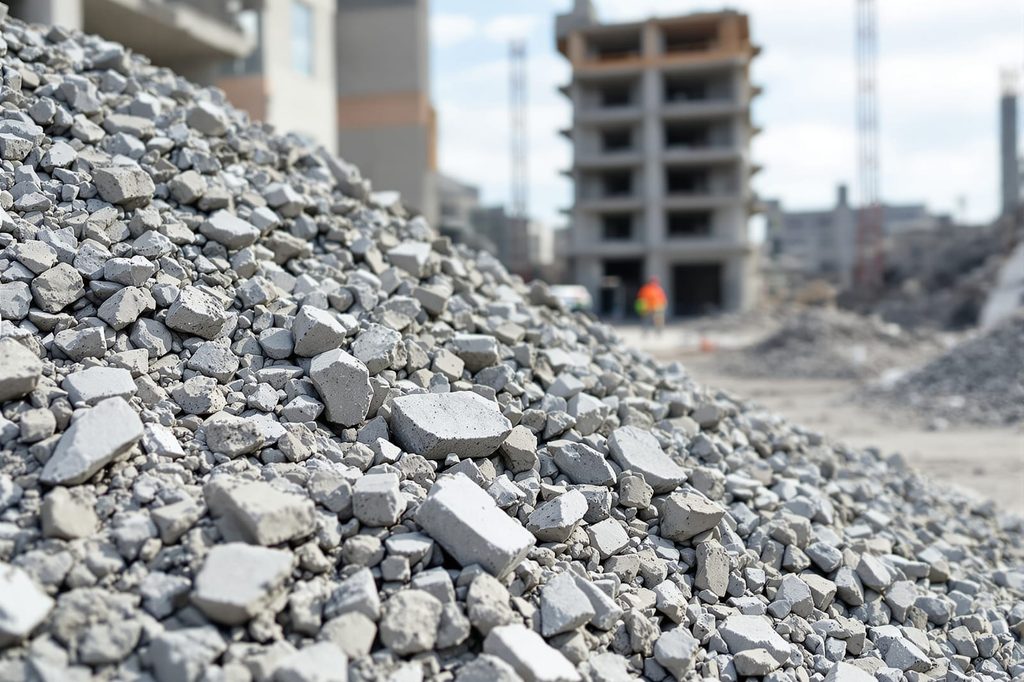
A dumpster, a hauler, a gate fee. For most of the industry’s history, that was the entire cleanup plan on a demolition or renovation project. Nobody thought twice about it because the cost was predictable and small enough to bury in the bid. That’s no longer true in a lot of markets. Landfill space is shrinking, gate fees are climbing, and contractors who never bothered to run the real numbers are starting to notice the difference on their margins. Construction and demolition recycling has become one of the more practical responses, and manufacturers such as R.R. Equipment have played a role in making on-site processing something a mid-sized contractor can actually own and operate, not just something a large recycling facility does.
Why the Old Approach Is Losing Ground
The traditional disposal model always had blind spots. It priced the dump fee and stopped there, ignoring the truck sitting idle in traffic, the driver’s hourly rate, the fuel burned on every round trip, and the fact that most projects need to bring aggregate back onto the site after hauling the old material away. None of that showed up as a single line on a bid sheet, so it was easy to overlook.
It’s harder to overlook now. Construction waste disposal costs have climbed steadily across much of the country as landfill capacity tightens, particularly near major metro areas where space was already limited. A fee that barely moved the needle a decade ago has, in plenty of regions, turned into a cost worth scrutinizing project by project rather than assuming away.
What Changes When Material Stays On Site
Processing concrete, asphalt, and masonry where it’s demolished instead of trucking it off flips several of those cost lines at once. There’s no outbound haul, so the fuel and driver time disappear. There’s no gate fee for whatever tonnage gets crushed instead of dumped. And because the crushed output often works as base material, fill, or drainage stone on the same job, a lot of contractors quietly skip a second expense too: buying virgin aggregate to replace what they would have thrown away.
Stack those three savings together and it’s easy to see why on-site demolition recycling has moved well past its reputation as an environmental nice-to-have. For a contractor running steady demolition volume, it’s often the option that protects the bottom line better than hauling ever did.
Where Job Site Debris Management Still Favors Hauling
None of this means every job benefits from bringing in a crusher. A one-off project generating a modest pile of debris may still come out ahead hauling it away, especially on a cramped site with nowhere to stage equipment or stockpile finished material. Mixed loads contaminated with drywall, wood, or other non-masonry debris complicate things further, since contaminated material is expensive to process cleanly and may need disposal no matter what equipment is sitting on site.
The contractors who benefit most tend to share one trait: repeat exposure to concrete and asphalt debris. Site contractors, paving crews, and demolition specialists who see this material week after week get far more value from owning or renting processing equipment than someone tearing out a single driveway. Compact and mobile crushers have made that kind of ownership realistic at a scale that simply wasn’t available to smaller operators a decade ago, without the footprint or price tag of a stationary plant.
Debris as Inventory, Not Liability
The real shift isn’t really about the machinery. It’s a change in how contractors frame the material sitting in the rubble pile. What used to be treated strictly as a problem to haul away is increasingly viewed as inventory, something with a second use waiting to be unlocked on site. As disposal costs keep rising and more contractors start pricing the full picture instead of just the dump ticket, construction and demolition recycling is positioned to keep spreading through the industry. The environmental case has always been there. What’s new is how often the financial case now points in the same direction.