You’ve spent another Saturday on your knees, scrubbing green slime off patio slabs with a brush that’s seen better decades.
The timber deck has gone grey again, the gravel from the path has somehow ended up in the kitchen, and the whole situation is starting to feel like a battle you’re not winning.
The good news is that you don’t have to keep fighting it. This year’s trending landscaping materials are built to handle the UK climate without demanding every spare weekend in return. Here are six worth knowing about.
- Porcelain Paving
If you’ve ever laid natural sandstone, you already know the routine. You seal it, it stains anyway, and after a couple of British winters the colour fades into something your estate agent would generously describe as ‘characterful.’
With porcelain paving, you skip all of that. The surface has near-zero porosity, which means rainwater, moss, and red wine from that optimistic garden party will sit on top instead of soaking through. A quick wipe and you’re done.
Frost is the other big win for UK gardens. Because the material doesn’t absorb moisture, you won’t see cracking when temperatures drop below zero in January.
You’ll get a consistent finish that holds its colour year after year, even in parts of the country where the sun makes roughly four appearances between October and March.
The slabs are thinner than natural stone but surprisingly tough, and they come in finishes that convincingly mimic everything from slate to concrete. If you want a patio that looks sharp without the annual resealing ritual, this is where most people are starting.
- Composite Decking
People have always had a love-hate relationship with traditional softwood decking in the UK. They love how it looks in June, but they hate how it looks by September, when the damp has turned it into a full-blown skating rink.
Composite decking, made from a mix of recycled wood fibre and plastic, cuts that entire cycle out of your routine. You won’t need to sand it, oil it, or treat it every spring.
And because the material doesn’t absorb water the way untreated timber does, you won’t end up dealing with warping, rot, or that furry green coating after a wet autumn.
You’ll also appreciate the fact that it’s splinter-free, which matters if you’ve got kids running around barefoot or a dog that uses the garden for their 7 AM zoomie route.
The upfront cost is higher than pressure-treated pine, but you’ll make that back in saved weekends and unopened tins of decking oil within a couple of years.
- Resin-Bound Gravel
Loose gravel ends up everywhere except where you originally put it. You’ll find it scattered across the lawn, wedged into your shoe treads, and inexplicably tracked into the hallway on a daily basis.
With resin-bound gravel, you don’t have that problem. The aggregate is mixed with a clear resin and trowelled into a smooth, solid surface, so you get the natural look of gravel without the constant raking and redistribution.
The finish is also fully permeable, so rainwater drains straight through instead of pooling on the surface. That ticks the box for UK SuDS drainage requirements and keeps your pathways dry even during a proper downpour.
You also won’t spend another bank holiday pulling dandelions out of the path, because a properly laid resin-bound surface doesn’t leave room for them to establish. If you’ve fought that battle before, you’ll understand why this alone is reason enough to make the switch.
- Corten Steel Edging
Every good garden design needs clean boundaries between surfaces, and corten steel has become the go-to edging material across UK gardens for a reason. The strips create sharp, modern lines between paving and planting beds without looking industrial or out of place.
What makes it particularly suited to the British climate is how it weathers. The steel develops a distinctive rust-coloured patina over the first year or two, and then the oxidation stabilises, leaving a protective layer over the metal beneath.
You end up with a warm, earthy tone that sits beautifully alongside the greens and greys of a typical garden here.
You won’t need to paint it, treat it, or swap out sections every few years. The finish genuinely improves with age, which is a welcome change from timber edging that splits after a couple of frosts.
- Recycled Plastic Lumber
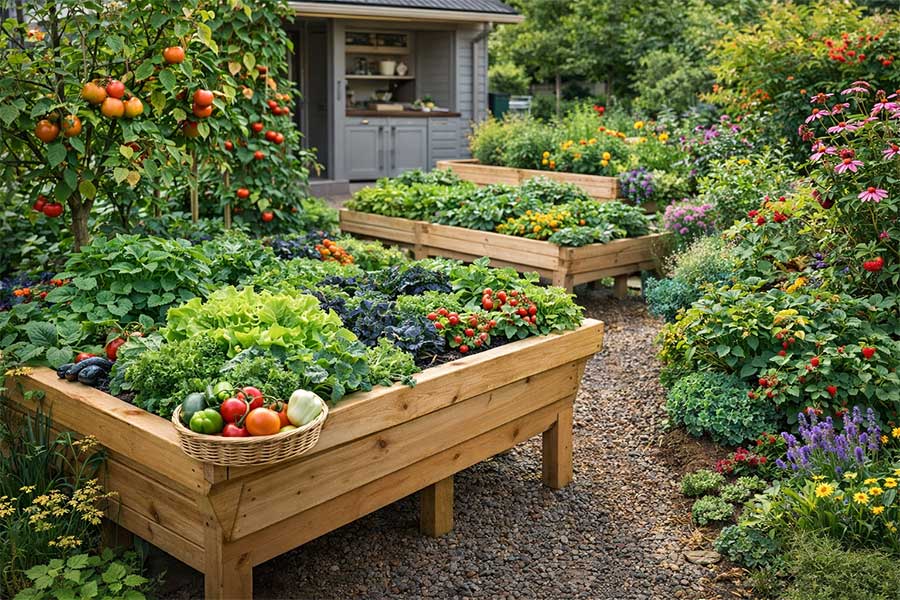
Raised beds, bench seating, and retaining walls have traditionally meant treated timber. And treated timber in the UK climate has traditionally meant eventual rot, warping, and replacement.
With recycled plastic lumber, you get the same structural versatility without any of that deterioration. The boards are made entirely from reclaimed waste plastic, so they won’t absorb moisture, splinter, or need any kind of protective coating.
You can cut, drill, and fix them the same way you would regular timber. But unlike regular timber, a plastic lumber raised bed will still look solid five or ten years from now, even if it’s been sitting in a permanently damp corner of a north-facing garden.
The eco credentials aren’t just marketing fluff, either. Every bench or planter you build is made from waste plastic that would otherwise end up in landfill. This lines up with the growing demand across the UK for materials that do less environmental damage.
- Permeable Block Paving
Your front garden probably doesn’t get the same design attention as the back, but UK planning regulations mean you can’t ignore it.
If you’re paving over a front garden larger than five square metres, the surface must allow rainwater to drain naturally. Solid, non-permeable paving without proper drainage will need planning permission.
With permeable block paving, you meet that requirement without any additional drainage systems.
The blocks are laid with slightly wider joints, so water passes through into the sub-base beneath. That reduces surface runoff and lowers the risk of localised flooding on your street.
If you’re planning a full garden renovation, low-maintenance landscaping can design and install a tailored scheme for you. This will ensure that you get the right surface for every area, from driveway to deck to planting bed.
Conclusion
You’ve now got six materials that will make your garden look fantastic without chaining you to a maintenance schedule every weekend.
So, pick the ones that suit your space, lay them properly, and you’ll finally spend a summer on the deck with a cold drink. That wire brush can take a permanent leave of absence in the shed.