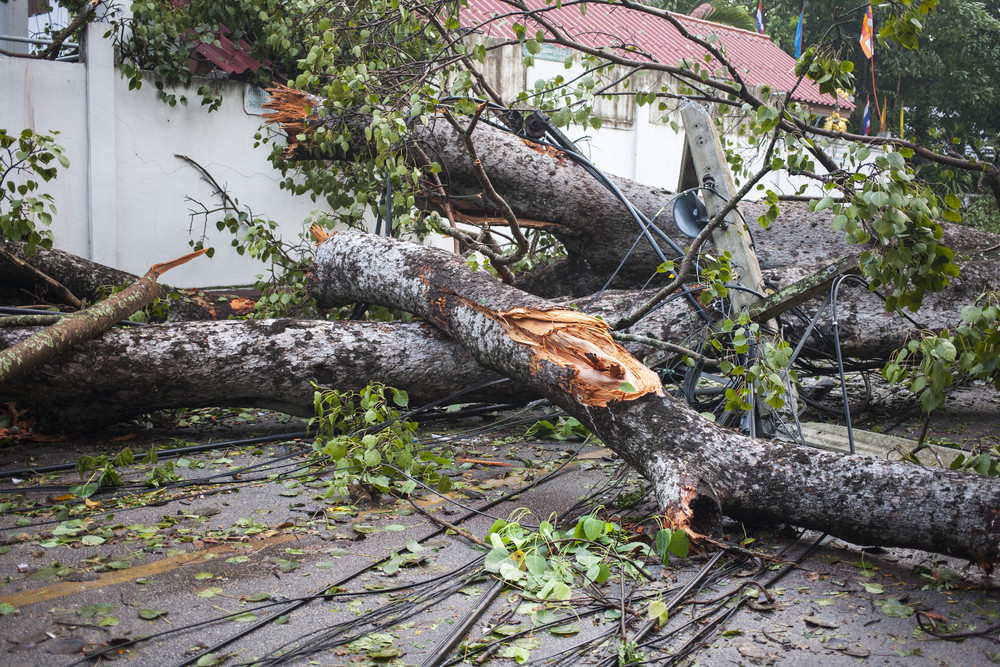
Trees add shade, beauty, and character to a property, but they can also become a serious hazard when they are weakened, overgrown, or planted too close to a house. A single heavy limb or toppled trunk can crush a roof, damage siding, and leave a homeowner facing expensive repairs. Understanding the warning signs and knowing when to call in help can make the difference between a healthy yard and a costly disaster.
The Hidden Cost of a Falling Tree
Most homeowners think of storms and hail as the biggest threats to their roofs, but trees often cause far more trouble. Data from Homes.com shows that trees coming down are the leading source of roof damage, adding up to more than $1 billion in property losses every year. A tree doesn’t need a hurricane to fall, either. Saturated soil, rotting roots, ice buildup, or a strong gust of wind can be enough to send a weakened trunk or branch crashing onto a home, car, or fence.
The damage rarely stops at the roof. Falling trees can puncture attics, break windows, pull down power lines, and let water into walls and insulation. That’s why prevention matters so much. Keeping trees healthy and addressing problems early is almost always cheaper than cleaning up after one comes down.
Warning Signs to Watch For
Many dangerous trees give clues long before they fail. Walk your property a few times a year and look closely at each tree, especially those near your house, driveway, or play areas. Signs of trouble include:
- Large dead branches, often called “widowmakers,” hanging in the canopy
- Deep cracks or splits running through the trunk
- Mushrooms or fungal growth at the base, which can signal root rot
- A sudden or growing lean toward the house
- Peeling bark or bare patches where leaves should be
- Soil heaving or cracking around the roots
Any one of these issues deserves attention, and several together suggest the tree may be close to failing.
When Removal Becomes the Right Choice
Not every struggling tree needs to be cut down. Pruning, cabling, and treatment for disease can often save a tree that still has a strong structure. But some trees are simply too far gone. According to guidance from the University of Maryland, homeowners should consider removing a tree once one-third of its interior has become hollow or rotten. At that point, the trunk has lost too much of its strength to safely support the weight of its branches, particularly during storms.
Removal can be a tough decision, especially for a mature tree that has been part of the landscape for decades. Still, when the alternative is a tree falling through your bedroom ceiling, safety has to come first. If you’re unsure, an arborist can perform a detailed assessment and help you weigh your options.
Regular Trimming Keeps Trees Safer
Routine maintenance is one of the best ways to keep trees from becoming threats. Thinning dense canopies reduces wind resistance, removing dead limbs eliminates falling hazards, and cutting back branches that hang over the roof protects shingles and gutters. Proper pruning also encourages healthier growth, making trees more resilient over time.
Timing matters as well. Many species are best pruned during their dormant season in late winter, when it’s easier to see the branch structure and the tree can recover quickly in spring.
Leave the Big Jobs to Trained Professionals
Climbing into a tree with a chainsaw is one of the riskiest home projects a person can attempt. Large limbs can swing unpredictably, and branches near power lines pose an electrocution hazard. Fortunately, skilled help is widely available. Estimates from the Bureau of Labor Statistics, reported by TCI Magazine, put the number of tree trimmers and pruners at about 63,700 nationwide. These professionals have the equipment, training, and insurance to handle difficult jobs safely.
When hiring a tree service, ask for proof of insurance, check reviews, and look for certified arborists when a health assessment is needed.
Protecting Your Home for the Long Run
Trees and homes can coexist safely with a little attention and care. By inspecting your trees regularly, trimming them on schedule, and removing those that have become structurally unsound, you can enjoy the shade and beauty they provide without worrying about what might come crashing down during the next storm.